
Demystifying Paid Ads for Small Businesses

Key learnings from our evening talk with Wise Bird Marketing
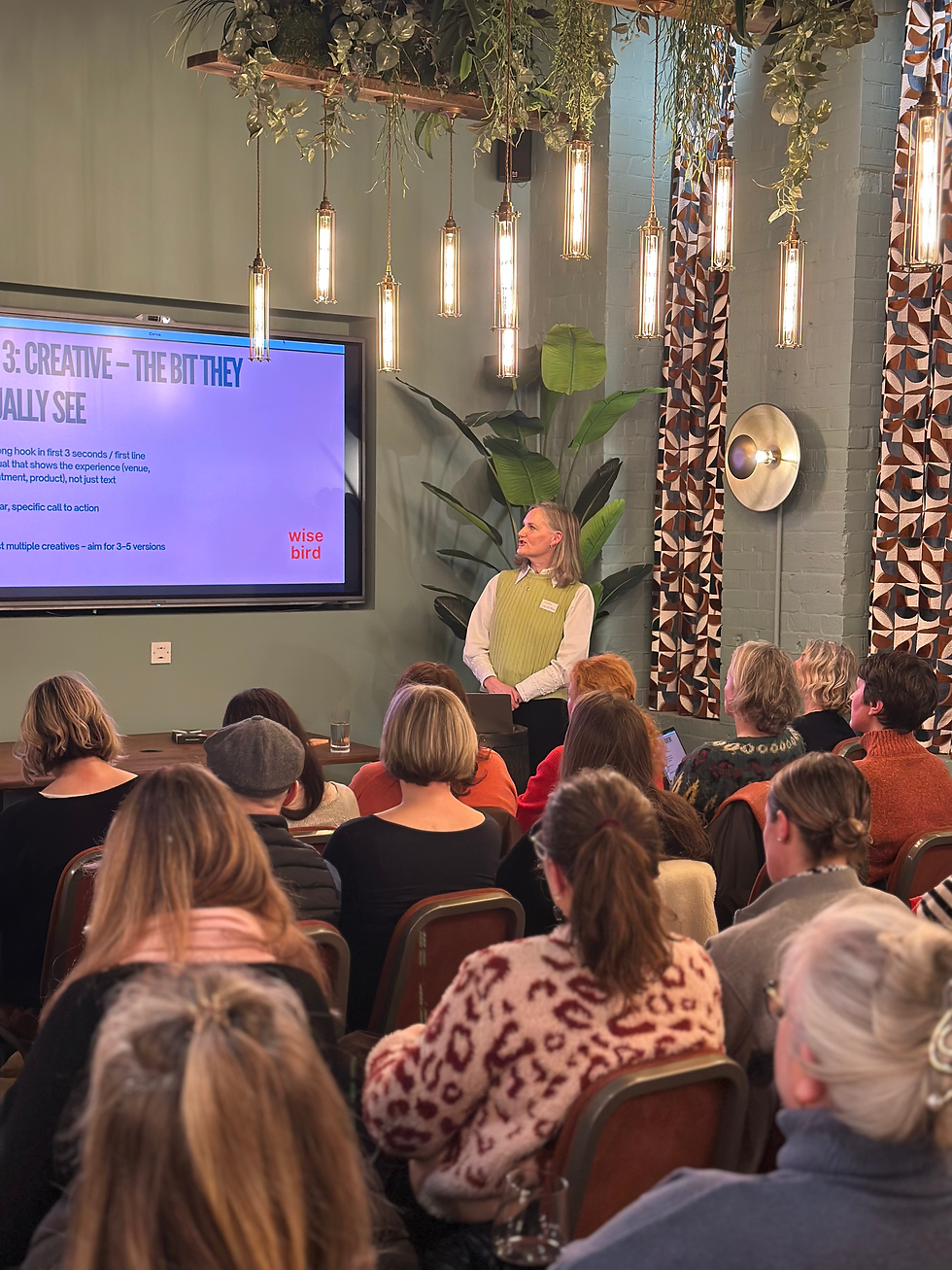
Paid ads can feel like one of those things you should understand as a small business owner… but often don’t quite know where to start. Too expensive, too technical, too risky or simply something you’ll “look into later”.
That’s exactly why we invited Sascha and Jo from Wise Bird Marketing to strip away the jargon and explain how paid ads can work sensibly for small, local businesses.
Here are the key takeaways from the evening.
1) Paid ads aren’t magic (and they’re not instant)
One of the most reassuring messages of the night was this: ads don’t fail just because they don’t work in a week.
There’s a learning phase, usually the first 7–14 days, where Meta are gathering data, testing audiences and figuring out who to show your ad to. Results can wobble early on, and that’s normal. Making big changes too quickly is often what causes problems. Patience and small, steady tweaks beat panic-editing every time.
You don’t need huge budgets but you do need clarity.
You can start small:
£2–£5 a day for awareness or testing an idea
Around £20–£30 a day for more consistent sales if your offer and website are strong
What matters far more than budget is focus. One clear campaign with one goal will always outperform five half-funded ones.
2) Organic and paid are not enemies
Organic content builds trust, personality and brand story. Paid ads scale reach when you have something specific to promote.
The best results come when they work together. Ads amplify what’s already resonating organically, they don’t replace it. If your organic content feels wobbly, paid ads won’t fix that. But if you’ve got something people already care about? Paid can help more of the right people see it.
3) Choosing the right platform (without overthinking it)
The simple breakdown shared on the night:
Meta (Instagram & Facebook): Brilliant for local events, hospitality, wellbeing, lifestyle products and storytelling. Strong local targeting and retargeting options.
Google Ads: Best for high-intent searches like “yoga near Henley” or “restaurant in Henley”. People are already looking, you’re just meeting them there.
TikTok: Great for visual products and younger audiences, but it needs lots of short-form video to work well.
You don’t need to be everywhere. You need to be where your audience already is.
4) The 5-part framework that makes ads feel manageable
One of the most practical parts of the talk was the simple framework Wise Bird use for every campaign:
Objective – What are you actually trying to do? Sell tickets, book appointments, generate leads, drive sales? Each goal needs a different type of campaign.
Audience – Who and where? Start local. Layer in interests. Understand warm audiences (followers, email list, website visitors) versus cold ones.
Creative – The bit people actually see. Strong hook in the first few seconds. Show the experience, not just text. Always include a clear call to action. Test multiple versions.
Budget – Be realistic. Fund one focused campaign properly rather than spreading spend too thin.
Measurement – Decide what “working” means. Tie your success metrics to your goal. Cost per sale, cost per lead, reach, engagement, not everything at once.
If people click but don’t buy, ads aren’t the problem.
5) Another important reminder: ads bring traffic, your website has to do the rest.
Before running ads, check:
Is your site mobile-friendly?
Is the offer immediately clear?
Is it easy to book or buy?
If clicks aren’t converting, it’s often the landing page that needs attention, not the ad.
6) DIY Vs Calling in help (and being honest about it)
DIY paid ads are realistic if you:
Are happy learning Ads Manager
Can check performance weekly
Are running simple, single-goal campaigns
It’s usually time to bring in support if:
You’re spending £500+ a month
You have multiple goals or offers
You’re stuck interpreting the data
Neither route is “better”, it’s about capacity, confidence and stage of business.
7) The biggest mistakes small businesses make with ads
These came up again and again:
Spreading tiny budgets too thin
Only ever boosting posts
No clear objective or success metric
Targeting too wide or the wrong locations
Ignoring the website or booking journey
The above are all fixable mistakes and not a reason to write ads off entirely.
So… are paid ads worth it?
The honest answer from the evening was refreshing: sometimes yes, sometimes not yet.
Paid ads work best when:
You have a clear offer
You know who you’re talking to
Your foundations (content, website, booking journey) are solid
They’re not a shortcut. They’re a tool and like any tool, they work best when used with intention.
If you joined us on the night, we hope this blog helps to build on the learning. And if you couldn’t make it, hopefully it reassures you that paid ads don’t have to be scary, expensive or all-or-nothing.
Start small and don’t be afraid to ask for help when you need it.


Comments